
Aviation
Aviation
Covid-19 has triggered the most severe economic recession the global economy has seen. Acute uncertainty remains over the timing of possible vaccines, the ability to develop at scale to meet required global demand, as well as the threat of a second, and even third, virus wave.
These unknowns underpin a diverging – but equally plausible – global economic outlook. Global GDP growth is expected to plummet by 6.0% in 2020, according to the OECD’s June forecasts. The OECD predicts that if a second outbreak emerges and forces a return to lockdowns, world economic output will plunge by 7.6% this year. In both scenarios, world economic output will not return to Q4 2019 levels for more than two years.
In this macro context, the airline industry is enduring the most dramatic disruption in its history. Global airlines will lose a combined $84bn in 2020, marking the worst year in airline history, according to the International Air Transport Association (IATA), followed by almost $16bn in 2021. For context, during the 2008 – 2009 recession the global airline sector collectively lost $31bn.
Issues Facing The Sector
With global air passenger levels plummeting, airlines must manage this demand crash in the context of high fixed operating costs. While in some regions airlines have been able to furlough labour costs, and grounded fleets have curtailed fuel costs, carriers still have high recurring liabilities relative to collapsed revenues, such as leasing, infrastructure, debt, and aircraft maintenance costs.
Airlines have already taken steps to curb fixed costs, which has negatively impacted the wide aviation supply chain, including manufacturers and various component suppliers. For example, current scheduled new commercial aircraft deliveries for 2020 is around 960, which reflects an approximate 40% decline compared to original plans at the turn of the year. Carriers’ options also include: (i) postponements of new planes, (ii) early sale of the existing fleet, (iii) mothballing certain planes until demand returns (e.g. jumbo carriers which cannot be filled due to depressed demand and social distancing guidelines), (iv) conversion of commercial passenger aircraft into cargo carriers.
As airlines around the world tentatively return to the skies, consumer behaviour may change, such as a preference for short-haul travel and a lower proportion of bookings within three days of travel, which is a lucrative segment for airlines as prices are usually higher. Elsewhere it remains to be seen whether corporates bruised by forced economic hibernation and surprised by the upside of the relative simplicity of videoconferencing for business meetings may curtail business travel, which would dilute another lucrative segment for airlines.
Reopening The Skies
There are already clear differences in policies related to the reopening of borders and imposed regulations on travellers at both country and regional level. Airlines will be sensitive to the differences – restrictions are particularly onerous for popular global travel destinations.
While airlines need popular markets to reopen without onerous demand-dampening restrictions, nations like the UK which has been severely by the pandemic are understandably cautious about the possibility of a ‘second wave’. As such, the UK is prioritising public health over economic activity.
Uncertainty over the future of the commercial airline industry is without parallel in its history. In Europe the regulatory environment has not enabled the same degree of consolidation to take place as has happened in North America. Before the pandemic, analysts were warning of two scenarios for the European sector: (i) declining short-haul capacity growth, and (ii) a widening gap between stronger airlines and weaker ones, which would lead to further carrier insolvency or distressed sales. Post-pandemic both scenarios are still plausible, but the scale and time horizon of consolidation/contraction is now likely to be broader and quicker.
Our Approach
With aviation companies notoriously difficult to trade through formal restructuring processes in many jurisdictions, our initial approach to restructuring will always focus on stabilising the business and finding effective methods of reducing costs and enhancing cash flow. This is in order to gain time for a restructuring plan to be developed and implemented in conjunction with management and other stakeholders. During this initial phase we will also assist in developing and stress-testing contingency plans.
During the next stage, airlines should be focused on revenue optimisation, rightsizing their fleet and retail footprint, employment costs and fuel price management contracts. We assist management achieve this in order to provide a suitable platform for future growth.
Finally, we work on developing a new financial structure suitable for the reorganised airline, which may involve new finance and changes in relative creditor and investor rights.
Risk Analysis
When it comes to tackling one of the most sensitive issues in international aviation, the risk of terror, we are able to implement tried and tested methods to securing an airline and its passengers. As pioneers in the development of accurate risk analysis and profiling systems, we advise carriers on how to implement the process on an international stage.
Regulatory Support
As a highly regulated industry, aviation businesses frequently find themselves in the throes of regulatory investigations or calls for evidence. We have experience in working with major carriers and our technology consulting services provide essential support to ascertain exposures or liabilities. By deploying state-of-the-art investigative techniques and software, data, documents and emails can be searched quickly and accurately using predefined terms to give an accurate picture and to help make the correct judgements in defence.
Our multidisciplinary approach means that we will pursue every option available to ensure the ongoing success of the business or investment.
Our capabilities include:
- Business stabilisation and cash management
- Reorganisation and strategic plan development
- Performance improvement analysis, including routes, fleet utilisation, slot timings, service change programmes
- Cost analysis, including labour, fuel, and non-fuel
- Marketing, sales and yield management assessment
- Managed exits, including corporate simplification, withdrawal and de-risk
- Mergers and acquisitions
- Refinancing
- Risk management and profiling
- Regulatory investigation support


Related Case Studies
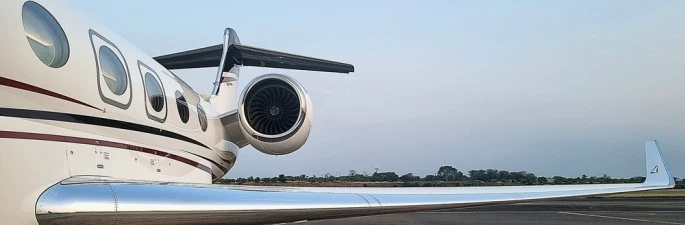
Aviation
Lilium GmbH and Lilium Aerospace GmbH: Selling Patent Portfolio
Founded near Munich in 2015, Lilium was developing an electric vertical take-off and landing (eVTOL) aircraft – the Lilium Jet. The start-up company went public on the US technology exchange NASDAQ in 2021. It had around 1,200 employees working on production setup and battery technologies. Overall, it invested some 1.5 billion euros in bringing the aircraft to market, but ran into financial difficulties. Lilium had to file for insolvency in 2024. Mr Ivo-Meinert Willrodt from PLUTA is the insolvency administrator for Lilium GmbH and Lilium Aerospace GmbH. These were involved in self-administration insolvency proceedings from October 2024 and then in regular insolvency proceedings since March 2025 after the sale of the company had fallen through. Mr Wolfgang Bernhardt is insolvency administrator for the holding company Lilium N.V.
The German electric aviation pioneer owned the intellectual property rights. Lilium’s patent portfolio included over 300 patents covering innovations in high-voltage systems, battery management, advanced aircraft design, flight controls, electric engines, propellers and ducted fans for eVTOL aircraft. Mr Ivo-Meinert Willrodt conducted a complex bidding process for the sale of the patent portfolio as part of the insolvency proceedings.
Insolvency administrator Mr Ivo-Meinert Willrodt sold the patents and registered intellectual property rights to Archer Aviation, a US-listed company. The purchase price is in the low to mid double-digit million euro range. After lengthy negotiations in a complex transaction process, Archer prevailed in the bidding. The sale to Archer offers the highest level of transaction and execution certainty. The creditors will also benefit from this outcome.
Aviation
American Airlines
Financial Advisor to the Official Committee of Unsecured Creditors of American Airlines in their Chapter 11 bankruptcy proceeding; participated in the assessment of a standalone restructuring vs. a U.S. Airways-led merger; analyzed the recovery to unsecured creditors under both scenarios.
Our Other Industry Experience